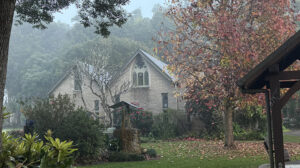
For the Abbey Community one of the early priorities, on arriving in Queensland in 1965, was to build a church which would become the centre of the group’s daily worship. In 1966 an area of bushland was cleared and preparations for building the church began. To say that in this event Fr Francis was entrepreneurial would be an understatement. He worked hard negotiating and bartering to source timber and all other resources needed to build the church. This included recycled timbers from a fish and chip shop and disused house which the owners wanted demolished.
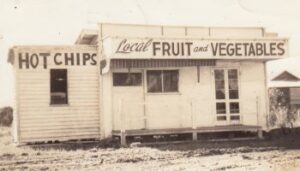
Source of timber for Abbey Church
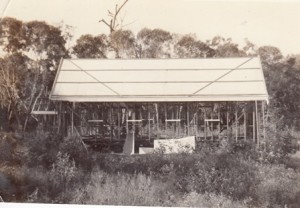
Early Stages of Building the Abbey Church
The building of the church was truly a Community effort with everyone using their skills and abilities best suited to bring the project to fruition. At that stage it was just a single chapel seating around 40 people.
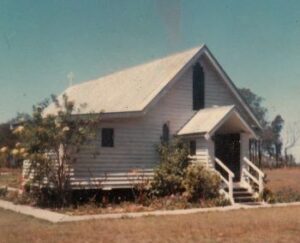
Abbey Church 1967
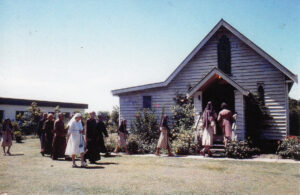
Community Attend Church
It was consecrated on 9th of September 1967 and has been the centre of the Abbey Community’s spiritual worship ever since.
However, with a growing congregation and the popularity of the new Abbey Church for weddings, baptisms and funerals, the church was extended eleven years later to include two side chapels dedicated to Christ the King and the Divine Mother, the Holy Spirit. The extended church was completed in 1978.
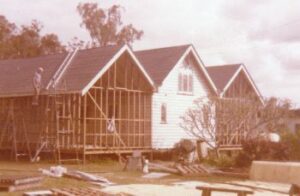
Church Extension 1978
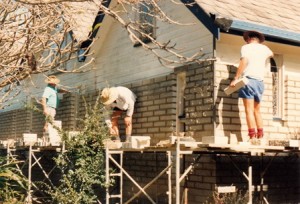
The Church is Bricked In
Further changes to the church occurred in the early 90’s when the outside of the building was bricked in to look as it does today.
The surrounding gardens, designed by Michael Strong, were gradually established, creating a lovely atmosphere of peace and tranquillity. Here, church members and the many visitors who attend services or come to see the remarkable collection of medieval and Gothic Revival stained glass windows, can enter a space of divine blessing and take solace or inspiration into their daily lives.