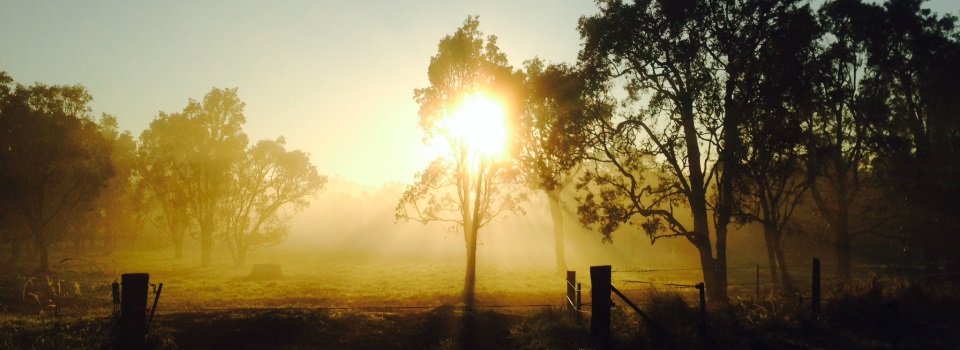
The Church was initially built by members of the Abbey Community to be the central focus of their daily spiritual practice and as a place of peace and inner reflection. The Abbey Community is a group of people dedicated to their personal spiritual growth and doing good works in the world.
The Community (also known as the Confraternity of the Kingdom of Christ) was the inspired vision of John and Jessie Ward and promotes the belief in the return of Christ to earth.
John Ward (1885–1949), was the son of an Anglican minister and born in British Honduras. He was a Cambridge scholar and became the Headmaster of the Diocesan School in Rangoon, Burma.
Due to ill health he retired from teaching becoming a prominent figure in the Federation of British Industries. During this time he met and eventually married Jessie Page, a Headmistress of a large school in Finchley, England.
After a series of mystical experiences relating to the return of Christ, Ward gave a number of lectures in London in the late 1920s. A nucleus of people joined John and Jessie Ward, to form a spiritual community they called the Confraternity of the Kingdom of Christ.
A residence on a small block of land was found in New Barnet, just north of London. Five of those who joined were teachers and a small private school St. Michael’s College was started. During this time John Ward was ordained and consecrated, and later became the Archbishop of the Orthodox Catholic Church in England. A 16th century tithe barn was moved to the property and rebuilt as the beautiful Abbey Church.
From childhood John Ward was an avid collector of historical art and artefacts, and he established Britain’s first ‘open air’ museum called the Abbey Folk Park. This museum became well known throughout England for its cultural impact and its unique ways of displaying his collection which by this time numbered up to 40,000 pieces. Unfortunately, it was forced to close during World War II. The Community then left England moving to the island of Cyprus until the Enosis movement made it unsafe for them to remain.
In 1955, they arrived in Sydney and after spending some time in Blackheath in the Blue Mountains, they moved to Queensland, to finally settle in Caboolture in 1965.
The Community in Queensland
On arriving in Queensland in 1965, the Community settled on the property which they called ‘St Michael’s’. In order to support themselves, the members cleared land, put in a dam and commenced farming.
Eventually a thriving agricultural business was achieved producing a variety of small crops including zucchinis and sweet potatoes, with a major focus on tomatoes and pumpkins. Commercial small cropping ceased in the early nineties.
Over those early years a successful piggery was established and operated until 2005. A small herd of dairy cows provided milk and butter for the Community’s needs and a commercial dairy was established by 1994 which currently milks over 100 cows and is the remaining focus of the Communities farming activities.
Today Community members strive to live a balanced life that revolves around attending Church Services, devotion, personal prayer and meditation and the practicalities of everyday life. The four main areas of the work of the Community include the Church, the Farm, the College and the Museum. Holding public services, visiting the sick, undertaking works of charity and giving public talks form part of the ongoing work of the members.
The Abbey Community Vision is to be a vibrant centre dedicated to the wellbeing and spiritual enrichment of all peoples. It is a group committed to personal spiritual growth and doing good works in the world. These are demonstrated through – the Church and pastoral care, the College providing holistic education for young people, and the Museum which inspires and educates through history. The Community has a farm that provides resources to support its vision and goals. Within this environment, individuals can be nurtured on many levels.